
Soil removal is one of those jobs that people underestimate until they are standing in front of a pile that is much bigger and heavier than they expected. Whether you are digging out garden beds, levelling a backyard, excavating for a retaining wall, or removing fill after a construction project, understanding how soil disposal works with skip bins saves you money and hassle.
Soil Is Heavy. Really Heavy.
A cubic metre of soil weighs roughly 1,500kg to 1,800kg depending on moisture content and composition. That means a 4m3 skip bin filled with soil could weigh 6 to 7 tonnes, far exceeding the weight limit for that bin size. This is the number one mistake people make with soil disposal: they focus on volume and forget about weight. You will hit the weight limit well before you fill the bin.
Choosing the Right Bin for Soil
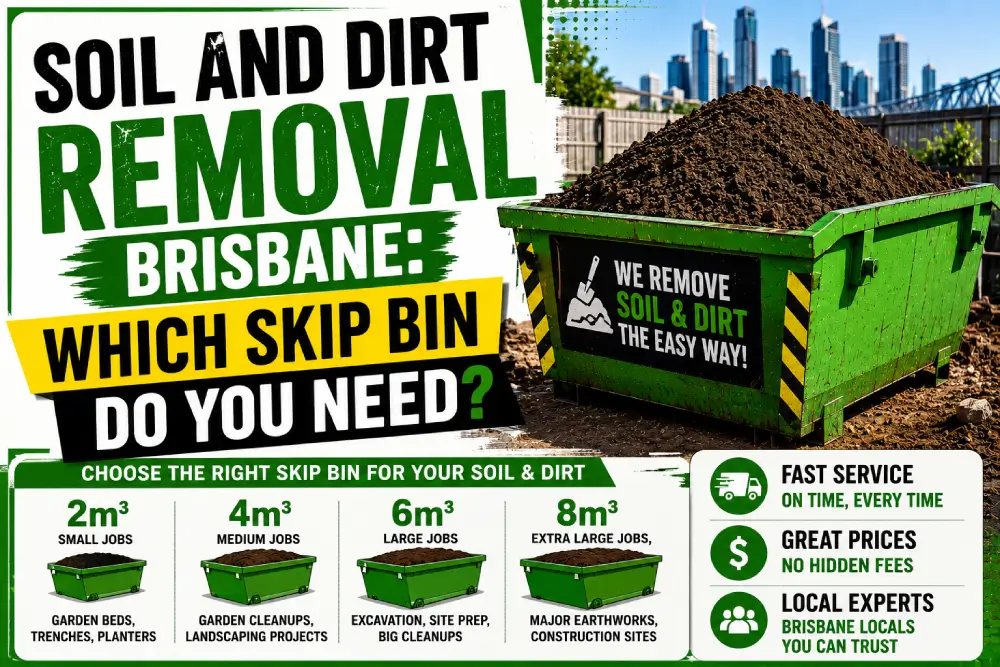
For soil and dirt disposal, talk to your provider about the weight allowance for each bin size. In many cases, a larger bin with a higher weight limit is more cost effective than filling a small bin and paying excess weight charges. Some operators offer specific soil and dirt bins with pricing structured around the weight rather than the volume. If you have clean fill (uncontaminated soil without debris), some operators or recycling facilities will accept it at lower rates because it can be reused.
Clean Soil vs Contaminated Soil
Clean fill is soil without contaminants like building materials, rubbish, chemicals, or organic matter. It is the cheapest to dispose of and can often be reused. If the soil is mixed with rocks, concrete, bricks, roots, or other materials, it is classified as mixed waste and costs more. Chemically contaminated soil from industrial sites requires specialist assessment and disposal and cannot go in a standard skip bin.
Tips for Soil Removal
Get an accurate estimate of the volume before booking. For a rectangular area, multiply length by width by depth in metres to get cubic metres. Remember that excavated soil expands by roughly 20 to 30 percent once it is dug up and loosened. Keep soil separate from other waste. And if you have a large volume, ask us about the most cost effective approach.