

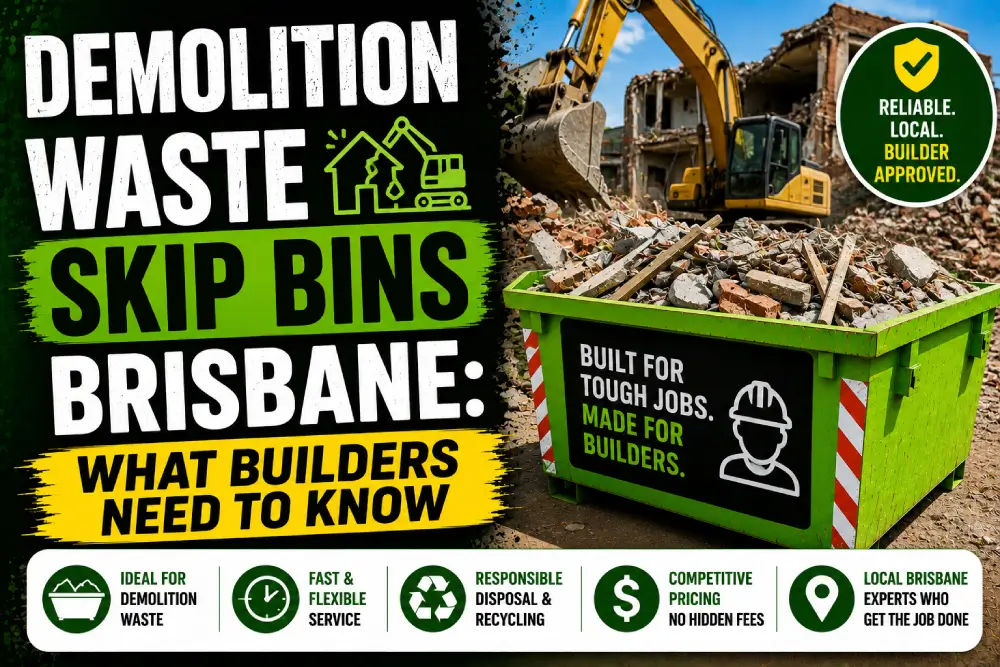
Demolition produces the heaviest and bulkiest waste of any residential or commercial project. Concrete, bricks, timber framing, roofing materials, plasterboard, tiles, and steel all need to go somewhere. Getting the skip bin logistics right keeps the site safe, the project on schedule, and the disposal costs manageable.
Common Demolition Waste Types
A typical residential demolition in Brisbane produces concrete (footings, slabs, paths), brick and block walls, timber framing and structural members, roofing materials (tiles, metal sheeting, battens), plasterboard and linings, tiles and ceramic fixtures, steel reinforcing and structural steel, and general debris. Each of these has different disposal requirements and costs.
Bin Sizes for Demolition
Partial demolition of a single room or small structure typically needs a 6m3 to 8m3 bin. A full house demolition usually requires a 10m3 to 12m3 bin, and often multiple loads. For large commercial demolitions, we can arrange regular bin swaps to keep the site clear throughout the project.
Separating Waste Streams
Separating concrete from general demolition waste can save money. Clean concrete goes to recycling facilities at lower tipping rates. Mixed demolition waste goes to general disposal at higher rates. If the volume of concrete is significant, a separate concrete only bin pays for itself in reduced tipping fees.
Asbestos in Demolition
Any structure built before 1990 in Queensland may contain asbestos. Before demolition begins, an asbestos survey must be conducted. If asbestos is found, it must be removed by a licensed removalist before general demolition proceeds. Asbestos cannot go in a standard skip bin under any circumstances.
Book Demolition Bins
We work with builders and demolition contractors across Brisbane. Call or book online to discuss your project.